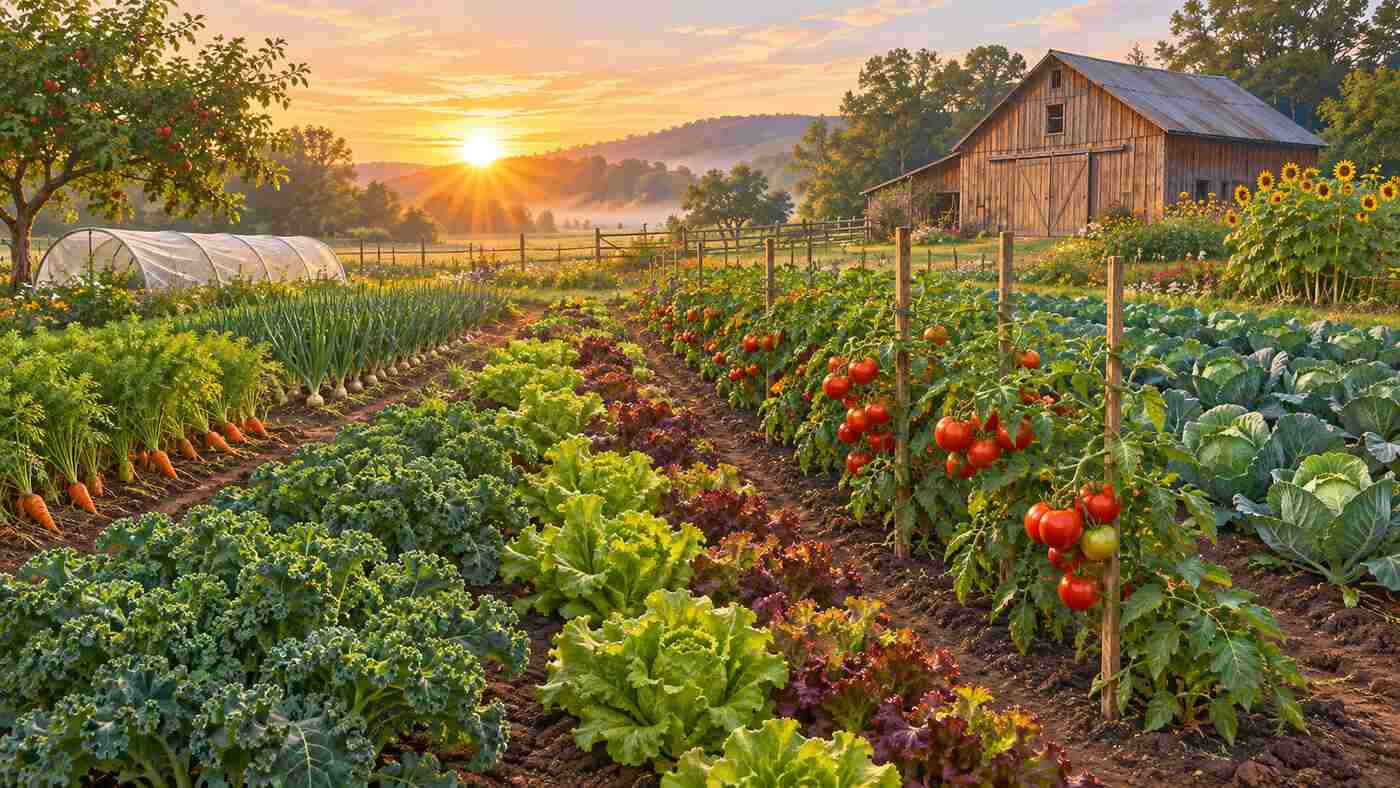
In short: Farm to table means food that goes directly from the farm where it was grown to the restaurant or customer, with as few steps between as possible. The farm-to-table movement is usually traced to Chez Panisse in Berkeley, opened in 1971. There is no single legal definition: US laws define local food as anything from within 275 or 400 miles to within the same state.
“Farm to table” is printed on menus everywhere, from Fayetteville bistros to airport cafés. It sounds simple, yet the phrase has no official standard, and the idea of local food it rests on is defined differently by different laws. This guide explains what the term means, where the movement came from, how official definitions of local food differ and what to look for on a menu. It is part of Greenhouse Table, and every fact comes from the sources listed at the end.
What does farm to table mean?
Merriam-Webster defines farm-to-table as “involving or advocating the direct sale and distribution of food (such as raw meat, vegetables, and grains) from its point of origin to customers”, and dates its first known use to 1959. In restaurants, the term usually means a kitchen that buys directly from named farms and writes its menu around what they grow.
Two related terms often appear beside it. Local food is food produced within a defined distance or region of where it is sold. Seasonal food is food eaten at the time of year it is harvested in that region. A true farm-to-table menu is both local and seasonal, which is why it changes through the year.

Where the farm-to-table movement began
Most histories start in Berkeley, California. Smithsonian Magazine reports that Alice Waters opened Chez Panisse on 28 August 1971, serving a fixed-price first menu of $3.95: pâté baked in pastry, duck with olives, a salad and an almond tart. Waters believed “a restaurant could be no better than the ingredients it had to work with.”
Good ingredients were hard to find. Smithsonian says an attempt at a restaurant-run farm failed, so Chez Panisse relied on a few Asian markets, urban gardeners and foragers who knew where wild mushrooms and watercress grew. Between 1977 and 1983 the menu moved from French models toward what became called California or New American cuisine. As farmers saw a market for seasonal local produce, they grew more of it, which the magazine says laid the foundation for the farm-to-table movement.
Farm-to-table timeline
| Year | Event |
|---|---|
| 1959 | First known use of “farm-to-table”, per Merriam-Webster |
| 1971 | Chez Panisse opens in Berkeley |
| 1994 | 1,755 US farmers markets counted by USDA |
| 2008 | Farm Act defines local food as under 400 miles or same state |
| 2019 | 8,771 US farmers markets counted by USDA |

How the USDA defines local food
US law has more than one answer. The USDA’s National Agricultural Library quotes the 2008 Farm Act, which defines a locally or regionally produced food as one transported less than 400 miles from its origin, or produced within the same state where it is sold. The Food Safety Modernization Act uses a different line for some sales: a restaurant counts as a qualified end-user if it is in the same state as the farm or food facility, or not more than 275 miles away.
Schools vary even more. The same library page reports the USDA’s Farm to School Census results on how districts define local: 26 percent said within the state, 21 percent within 50 miles, 13 percent within 100 miles, 10 percent within the region and 6 percent within 200 miles. None of these laws regulates the words “farm to table” on a restaurant menu.
Farmers markets and the local food boom
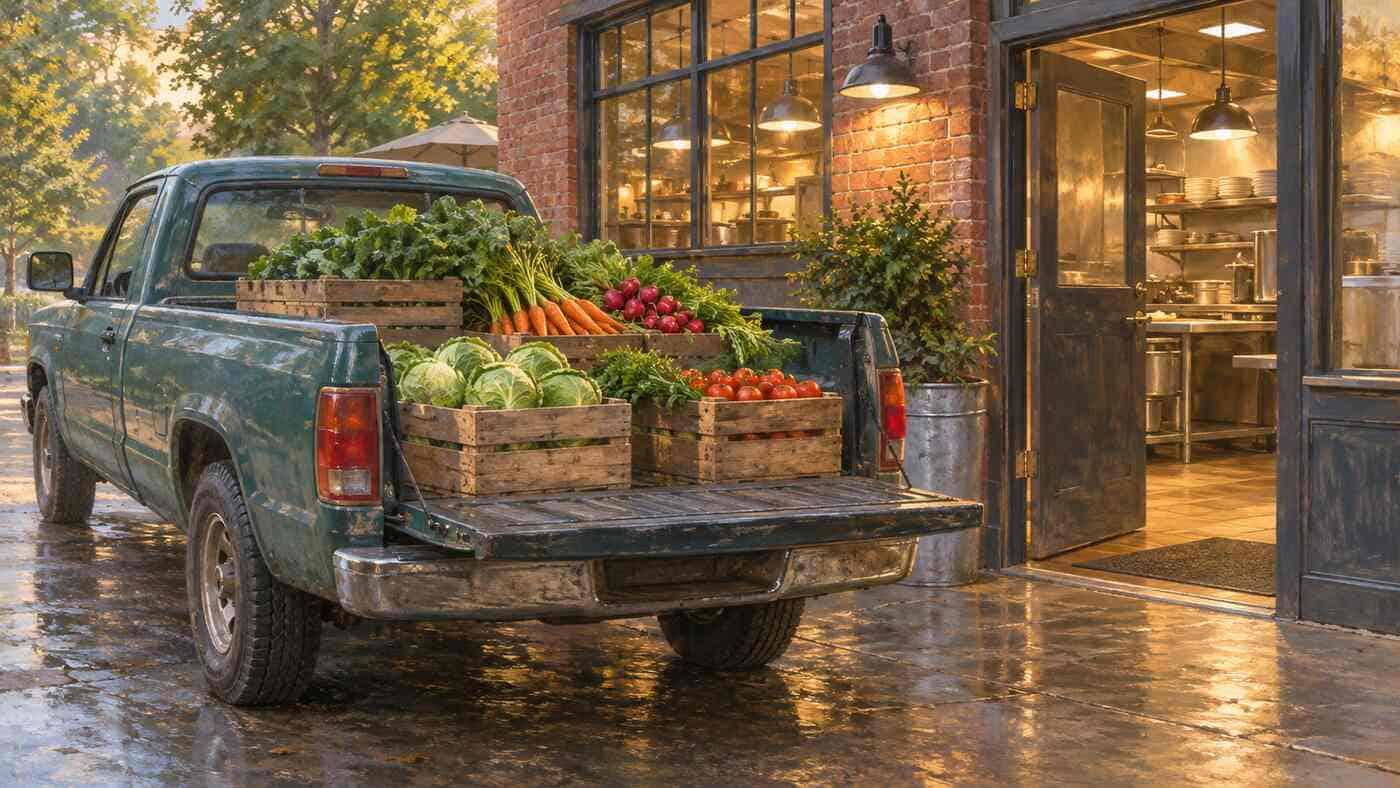
The movement grew alongside farmers markets. The USDA’s Economic Research Service reports that the number of US farmers markets rose from 1,755 in 1994 to 8,771 in 2019, an average growth of nearly 7 percent a year, though growth slowed after 2011. In its 2019 survey, about 40 percent of vendors said they sold imperfect produce that would not be sold in mainstream stores.
Fayetteville, Arkansas, shows how the two fit together. Its market dates from 1973, and its restaurant Greenhouse Grille, opened in 2006, built its name on buying from local farmers. Our guides to the Fayetteville Farmers Market and the history of Greenhouse Grille tell those stories.
What farm to table looks like in practice
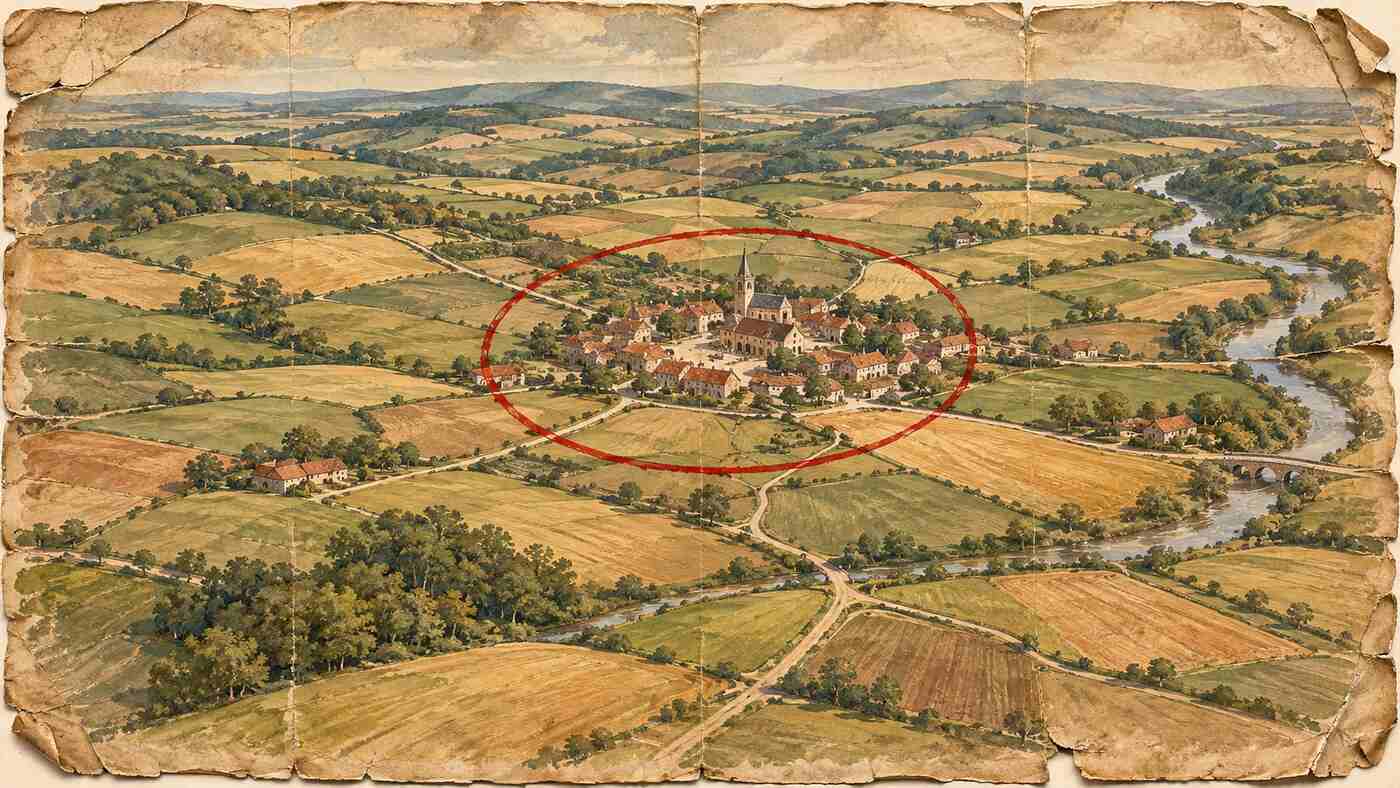
A single small restaurant shows the practical side. Talk Business & Politics reported in 2007 that Greenhouse Grille in Fayetteville bought free-range chicken from Berryville, Arkansas, and that its owners said, “We haven’t turned down a local farmer yet.” Two years later the magazine reported that at least 40 percent of the restaurant’s food was organic year round, rising to as much as 70 percent at the peak of the growing season. The owners admitted they made compromises, keeping sweet potato fries on the menu because you have to “pick your battles”.
That gap between the peak season and the rest of the year is typical. The Arkansas Department of Agriculture’s local harvest calendar shows how the supply of local crops in the state rises and falls through the year, which is why a seasonal menu in Arkansas looks very different in July and January.

Why farm to table is hard to verify
Because the phrase has no legal standard, it can be used loosely. In 2016 the Tampa Bay Times investigation “Farm to Fable” checked restaurant claims against suppliers and found many that did not hold up. Our guide on how to check farm-to-table claims explains what the reporters found and the questions diners can ask. Sustainability is a related but separate question, covered in our guide to sustainable restaurant practices.
Key takeaways
- Farm to table means food that moves directly from its point of origin to customers.
- The farm-to-table movement is usually traced to Chez Panisse, opened in Berkeley in 1971.
- The 2008 Farm Act defines local food as under 400 miles or within the same state.
- US farmers markets grew from 1,755 in 1994 to 8,771 in 2019.
- No law regulates “farm to table” on menus, so claims need checking.
Common questions
Is farm to table the same as organic?
No. Farm to table describes where food comes from and how directly it reaches you. Organic describes how it was grown, under a certification standard. A farm-to-table restaurant may buy from local farms that are not certified organic, and organic food can travel a long way.
How far away can local food come from?
It depends on who is defining it. The 2008 Farm Act allows under 400 miles or the same state, the Food Safety Modernization Act uses 275 miles or the same state for some sales, and many school districts use 50 or 100 miles.
Who started the farm-to-table movement?
Alice Waters, who opened Chez Panisse in Berkeley in 1971, is the figure most often credited. Smithsonian Magazine notes the movement also depended on the farmers and foragers who began producing seasonal food once restaurants created a market for it.
Is farm to table more expensive?
The sources we used do not give price comparisons, so we cannot say in general. Prices depend on the restaurant, the season and the farms involved. Asking where specific dishes come from is a better guide to value than the label.
How we put this together: the definition comes from Merriam-Webster; the Chez Panisse history comes from Smithsonian Magazine; the definitions of local food come from the USDA National Agricultural Library; farmers market numbers come from the USDA Economic Research Service; the Farm to Fable reference comes from the Tampa Bay Times.
Sources
- Merriam-Webster: farm-to-table
- Smithsonian Magazine: Fifty years ago, Chez Panisse launched the farm-to-table movement
- USDA National Agricultural Library: Local food and distance
- USDA Economic Research Service: Farmers markets chart of note
- Tampa Bay Times: Farm to Fable, 2016
- Talk Business & Politics: Green restaurants and stores attract a following, 2009
- Arkansas Department of Agriculture: Local harvest calendar
- Fayetteville Farmers Market: About us
- Talk Business & Politics: Greenhouse Grille’s organic edibles, 2007